

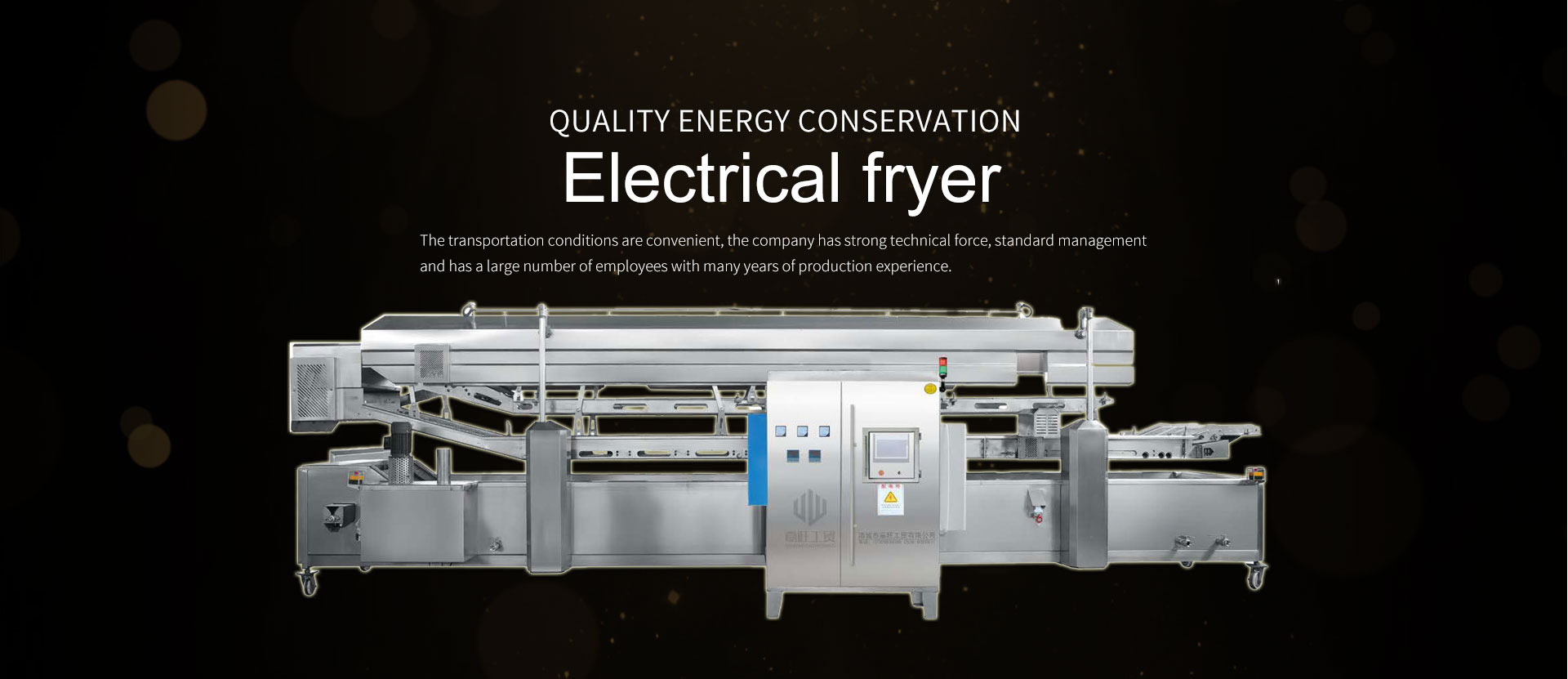
What Buyers Should Check Before Choosing an Oil Fryer Factory
It often starts with a practical problem: a fryer looks acceptable on paper, the quotation is competitive, and the delivery promise seems reasonable. Then, during internal review, doubts appear. Is the heating system stable enough for daily production? Can the factory support matching equipment later? If maintenance parts are needed, will someone actually respond? When choosing an oil fryer factory, these questions matter because the wrong decision usually shows up after installation, when production schedules and operating costs are already affected.
In baking-related production, a fryer is rarely a standalone purchase. It usually has to work with oil filters, oil tanks, and sometimes steam-based processing equipment upstream or downstream. That is why a sourcing decision should not be based only on fryer size or price. A more useful approach is to review the factory the same way you would review a long-term production partner: by checking how they build, test, explain, and support the equipment.
Start with the production reality, not the brochure
A common mistake is comparing only model specifications. That helps narrow options, but it does not show whether the factory understands your actual line conditions. Before moving too far in discussion, confirm the basic production context: product type, batch or continuous workflow, expected frying output, oil management method, cleaning routine, available floor space, power conditions, and whether the fryer must connect with related equipment.
If a factory responds with generic answers and pushes a standard model without asking about these details, that is a warning sign. A capable oil fryer factory should ask practical questions first, because fryer performance depends on more than tank dimensions and temperature range.
Look closely at how the factory handles quality control
Buyers often focus on the finished machine but forget to evaluate the factory process behind it. Ask how materials are selected, how core components are checked before assembly, and whether the unit is tested before shipment. You do not need complicated claims or polished language. In fact, simple and clear answers are more useful.
Pay attention to whether the factory can explain details such as temperature control stability, oil circulation logic, drainage design, insulation structure, and access points for cleaning. If these topics are answered vaguely, it becomes harder to trust the machine in daily use. Good quality control usually shows up in the way a factory explains small, unglamorous things.
Check compatibility with the rest of the line
Another issue that creates trouble later is poor system matching. Even if the fryer itself is acceptable, the overall line may become inefficient if the oil filter, oil tank, or transfer sections are not considered early. For example, if your process includes steaming or thermal transition before frying, it helps to ask whether the supplier is familiar with related equipment such as a Steam tunnel machine. This does not mean you must buy everything from one source, but it does show whether the factory understands how fryer selection affects the full process flow.
Compatibility discussions should include inlet and outlet height, material handling direction, control coordination, cleaning access, and future expansion. These are the kinds of details that save time during installation and reduce rework later.
Do not overlook service questions during early communication
Many sourcing problems are visible before the order is placed. Response speed, drawing clarity, willingness to revise technical details, and accuracy in documentation all say something about future support. If communication is already slow or inconsistent, after-sales service may become difficult when an urgent issue appears.
It helps to ask a few direct questions: which parts are usually replaced first, what information is needed for troubleshooting, whether wiring or operation documents are supplied clearly, and how technical support is handled if installation questions come up. You are not looking for perfect promises. You are checking whether the factory has a workable support process.
Use comparison standards that go beyond price
When several suppliers look similar, it is useful to compare them through decision points instead of sales language. One factory may be suitable if you need a straightforward standard fryer quickly. Another may be better if your line includes oil filtration, tank integration, or steam-related sections that need coordination. In some cases, a supplier with broader process understanding can reduce uncertainty even if the initial quote is not the lowest.
A practical review usually includes these questions: does the design fit the real product and workflow, can the factory explain critical technical points clearly, is testing handled in a way you can verify, are related equipment interfaces considered, and does communication feel reliable enough for follow-up support? If several answers remain unclear, pause the decision.
Choosing an oil fryer factory is less about finding the most attractive brochure and more about reducing avoidable risk. If you evaluate the factory through process understanding, build quality, equipment matching, and service behavior, the final choice becomes much easier to defend internally and much less likely to create problems after delivery.
Online Consultation