


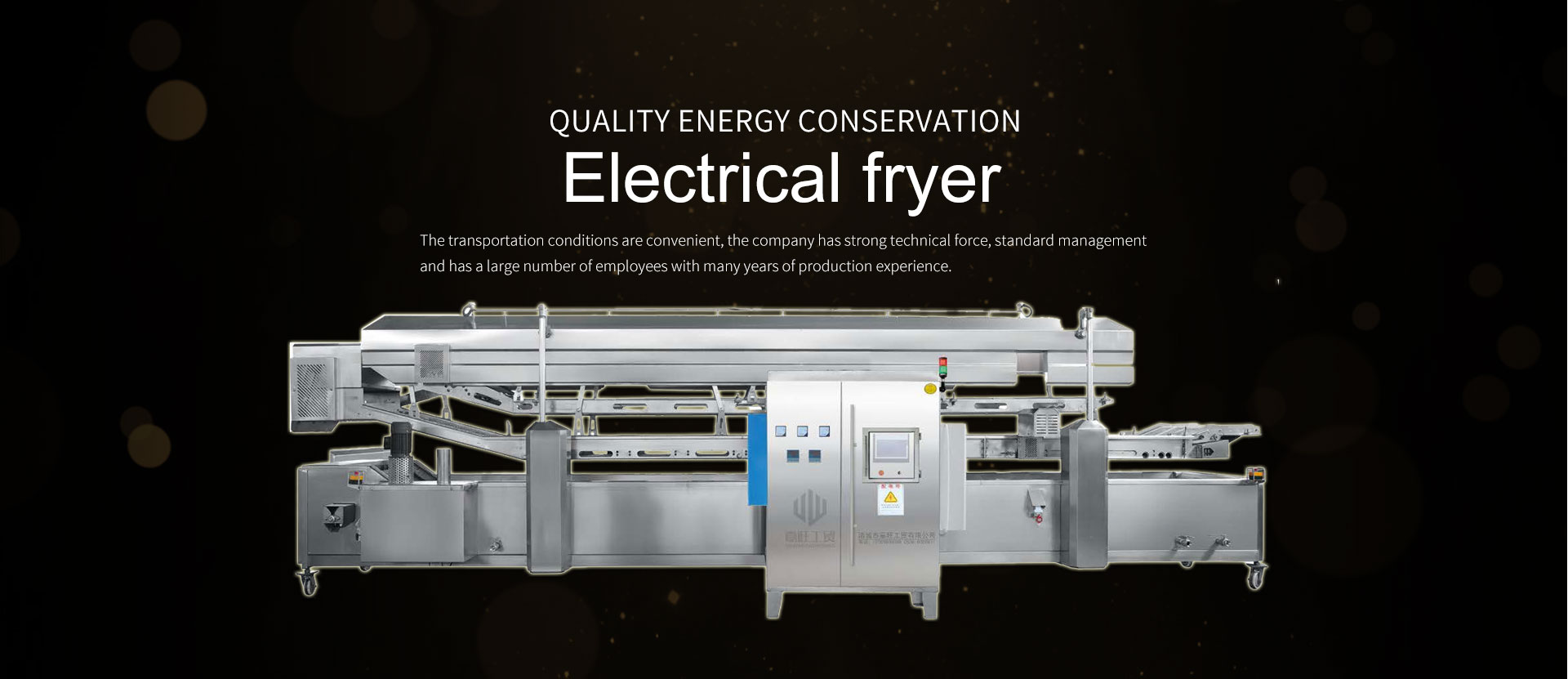
Electrical Fryer for Chicken: Temperature Control That Protects Yield
In chicken frying, small temperature shifts change more than color. A reliable electrical fryer for chicken helps hold moisture, limit oil pickup, and keep batch quality steady across a full production day.
That matters in bakery and prepared-food lines where fried chicken may sit beside steaming, baking, or holding stages. Heat stability affects yield, texture, rework rates, and the pace of downstream equipment.
Why temperature control affects yield
An electrical fryer for chicken does more than cook protein. It manages how fast the crust sets, how much internal moisture remains, and how evenly each piece finishes.
If oil temperature drops too far after loading, coating can absorb excess oil before the surface structure forms. If heat runs too high, color develops too quickly while the center still needs time.
The result is usually visible in three places: darker variation, inconsistent bite, and lower sellable output. In practical terms, poor control often means more trimming, more rejects, and less predictable production planning.
Where this fits in a broader processing line
Chicken frying rarely stands alone. Many facilities combine electrical fryer, oil fryer, oil filter, and oil tank systems with steam tunnel machines, double helix cookers, steaming and baking machines, or steam cabinets.
From that wider equipment view, fryer temperature is not only a cooking parameter. It also influences line balance, holding time, seasoning performance, and the final appearance of packed products.
In coated products, preparation quality matters before frying begins. A well-matched Powder mixer can support more uniform dry blends, which helps the fryer deliver more consistent crust development.
Key operating points worth watching
The best electrical fryer for chicken is only as stable as its daily operating conditions. Several checkpoints usually tell the real story on performance.
- Load recovery speed after product enters the fryer.
- Temperature consistency between the start and end of a shift.
- Oil cleanliness and filtration frequency.
- Match between fry time, product size, and coating thickness.
- Drainage and post-fry holding conditions.
Usually, operators notice that stable heat reduces corrective adjustments. That means fewer manual interventions, less guesswork, and a more repeatable finish from batch to batch.
Common production scenarios
These scenarios show why the phrase electrical fryer for chicken should be understood as a process tool, not just a heating tank. Its value appears in product uniformity and line efficiency together.
How to judge a suitable setup
A useful evaluation starts with the product itself. Bone-in pieces, boneless fillets, nuggets, and coated portions do not respond to the same heat curve.
Then look at upstream and downstream coordination. Mixing, marination, frying, filtering, holding, steaming, or baking should support one another instead of forcing repeated corrections at the fryer.
It also helps to compare actual loss points. If the issue is oil pickup, crust breakage, or color drift, the answer may involve filtration, loading rhythm, or ingredient consistency as much as nominal fryer temperature.
In some lines, ingredient preparation has a quiet but real effect. Consistent premix handling with tools such as a Powder mixer can improve coating behavior before product ever reaches hot oil.
A practical next step
When reviewing an electrical fryer for chicken, focus on temperature recovery, oil management, product variation, and how the unit fits the full line. Those points usually reveal more than headline power or tank size alone.
A clear comparison based on yield protection, texture targets, and daily throughput will make equipment decisions more grounded. That is usually the fastest way to judge whether a fryer setup truly supports consistent chicken production.
Online Consultation