

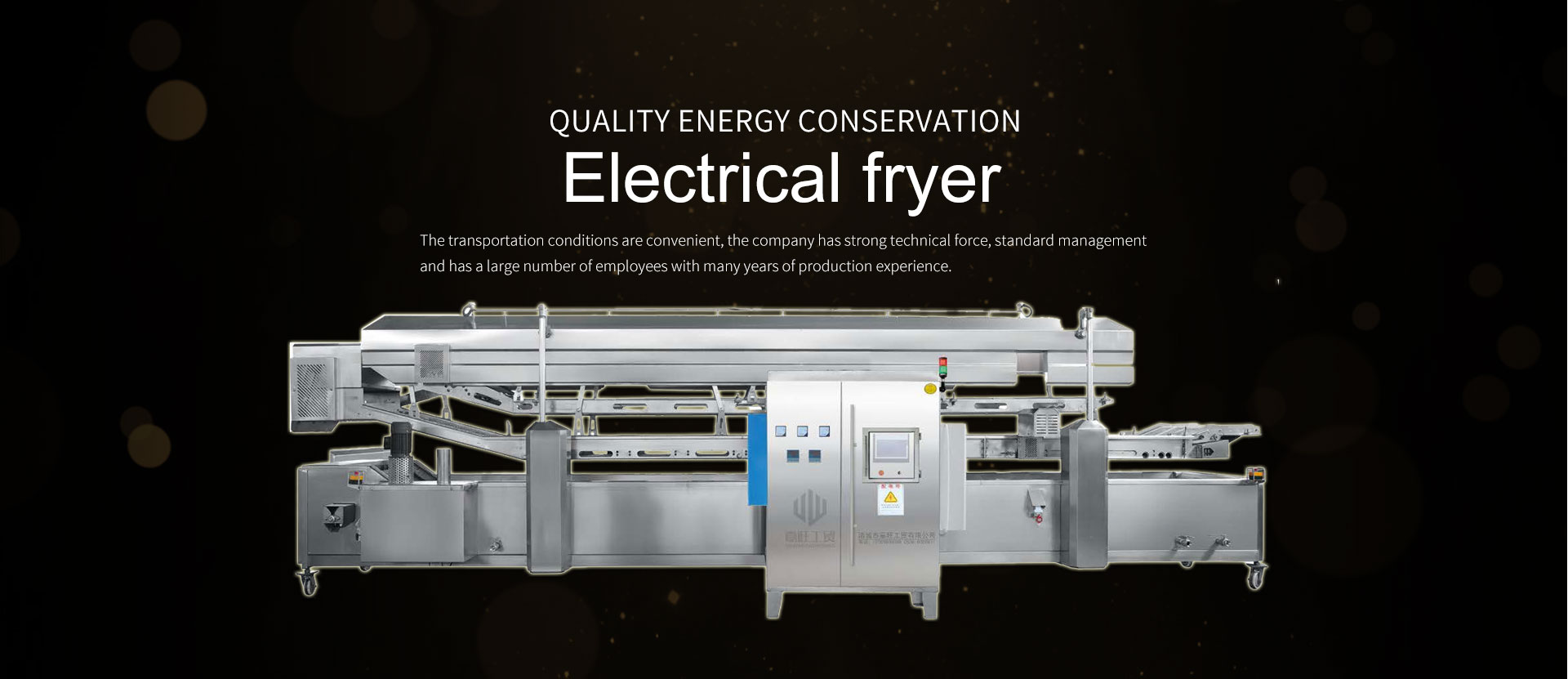
How to Choose an Electrical Fryer for Snacks with Fast Menu Switching
How to Choose an Electrical Fryer for Snacks with Fast Menu Switching
For fast-moving snack lines, fryer selection affects more than cooking speed.
It shapes product consistency, labor use, oil life, and changeover efficiency.
That is why an electrical fryer for snacks should be judged as a system choice, not a single machine purchase.
When menus switch often, small design details quickly become operating advantages.
Start with Menu Switching Speed
The first question is simple: how often will products change in one shift?
A line making fries, nuggets, coated snacks, and dough-based items needs flexible temperature response.
A strong electrical fryer for snacks should recover heat quickly after each batch.
It should also store multiple recipes for time, temperature, and conveyor speed.
- Fast heating recovery reduces waiting time between products.
- Recipe memory lowers operator error during frequent changeovers.
- Stable control improves color and texture consistency.
Check Heating Control and Product Quality
Uneven heating is one of the biggest hidden costs in snack production.
It creates color variation, inconsistent moisture loss, and avoidable oil absorption.
An electrical fryer for snacks should provide precise zone control across the frying area.
This matters even more for mixed product sizes or seasonal menu launches.
Look for accurate sensors, responsive controllers, and insulation that limits heat loss.
Do Not Separate Frying from Oil Management
From a project view, oil handling must be reviewed together with fryer capacity.
Poor oil circulation shortens oil life and raises cleaning frequency.
That increases downtime, utility use, and waste disposal pressure.
In practical terms, pairing the fryer with an appropriate Oil tank can support cleaner transfer and steadier supply.
This becomes more valuable when the line runs long hours or switches product categories often.
Review Integration with the Full Line
A fryer rarely works alone in a modern snack plant.
It must connect smoothly with feeding, de-oiling, seasoning, filtering, and packaging equipment.
When evaluating an electrical fryer for snacks, confirm interface logic and control compatibility early.
This also applies to upstream steaming or baking processes in hybrid snack lines.
If the process includes pre-treatment, oil flow design and external storage options such as an Oil tank should be reviewed in layout planning.
Use a Practical Evaluation Table
Make the Final Choice with Operating Reality in Mind
The best electrical fryer for snacks is not always the highest-capacity model.
It is the one that matches product mix, shift rhythm, plant layout, and cleaning resources.
Ask suppliers for test data, actual power consumption, and changeover procedures.
Then compare total operating impact, not just purchase price.
A well-chosen electrical fryer for snacks will make expansion easier, switching faster, and day-to-day production far more predictable.
Online Consultation