


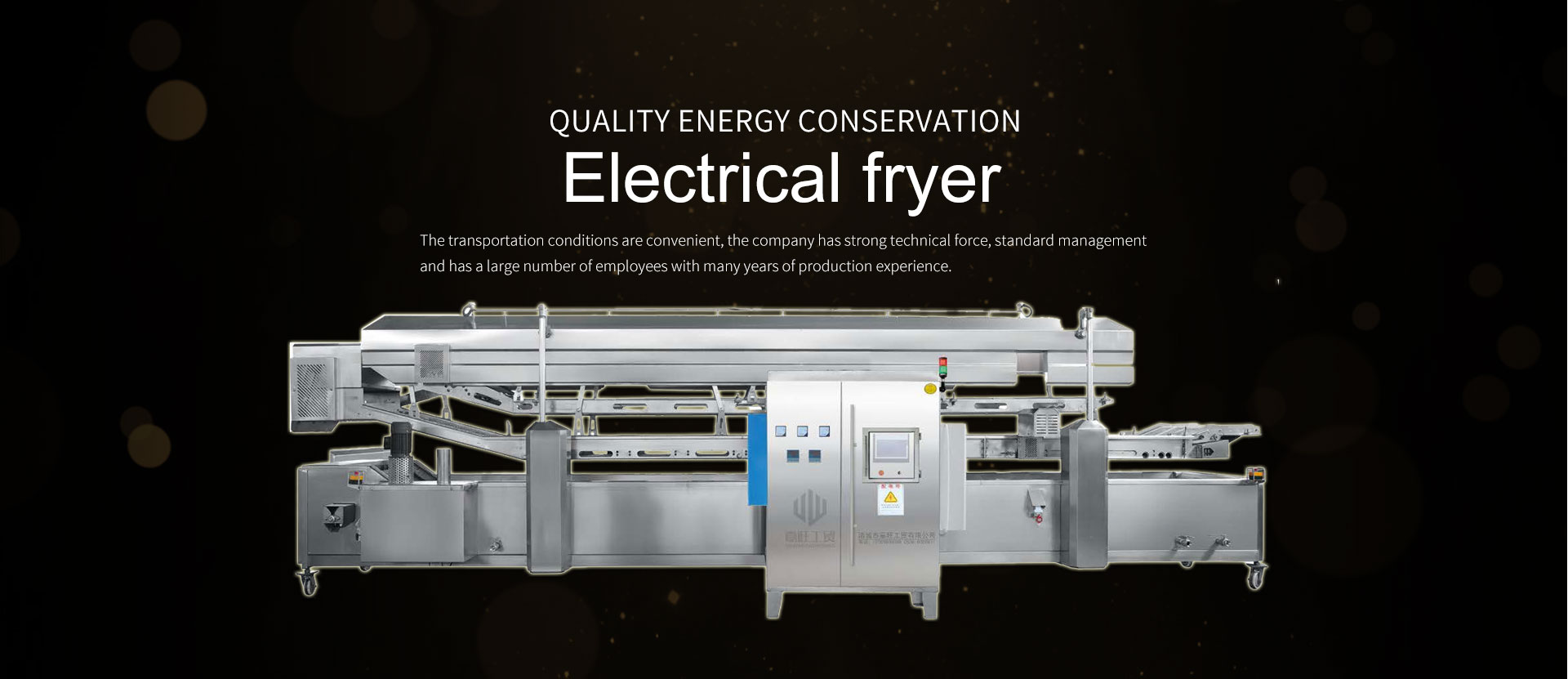
How to Verify a Food Grade Electrical Fryer for Safe Daily Production
Why does food grade verification matter beyond the spec sheet?
A food grade electrical fryer is not confirmed by wattage, tank size, or output alone.
For daily bakery and food processing work, the real check starts with contact materials, thermal control, and cleaning access.
That matters even more when fried lines connect with oil filters, oil tanks, steam cabinets, or steaming and baking machines.
If one section is hard to clean or unstable in temperature, product consistency and hygiene both suffer.
In practice, verification means checking how the fryer performs in repeated production, not only how it looks in a brochure.
Which materials should be checked first on a food grade electrical fryer?
Start with every food-contact surface.
The tank, basket, welding seams, drain area, and lid should use suitable stainless steel with documented food-contact compliance.
A polished surface helps, but finish alone is not enough.
Ask for material certificates, weld treatment details, and confirmation that gaskets, handles, and seals tolerate edible oil and cleaning chemicals.
A useful cross-check is whether the supplier can explain dead corners, residue traps, and oil drainage paths clearly.
If batter-coated products are involved, residue control becomes stricter, especially when upstream consistency depends on batter mix.
How can you tell if temperature control is truly stable?
A food grade electrical fryer should recover quickly after loading and hold a narrow operating range during continuous runs.
The common mistake is checking only the displayed setpoint.
More reliable verification includes sensor location, actual oil temperature mapping, over-temperature protection, and controller response under production load.
Look for these signs during a test:
- Temperature deviation stays controlled after repeated batch feeding.
- Oil does not overheat near heating elements.
- The controller reacts without large swings.
- Safety cut-off activates at the documented threshold.
Stable heat protects color, texture, and oil life. It also reduces waste from uneven frying.
What hygiene details usually reveal whether the design is production-ready?
Cleanability often tells more than appearance.
A production-ready food grade electrical fryer should allow full access to the tank, drain valve, basket supports, and splash zones.
Needlessly complex frames, hidden fasteners, and narrow internal corners tend to collect crumbs and carbonized oil.
The table below helps separate acceptable claims from useful verification points.
Are certificates enough, or should the fryer be tested on site?
Certificates are necessary, but they are not the full answer.
A food grade electrical fryer should be reviewed through documents and a working test, ideally with the real product load.
That is where issues appear: slow recovery, unstable baskets, poor oil circulation, or difficult cleaning after sticky coatings.
When possible, compare it with the surrounding process, including oil filtration and product transfer.
For lines using pre-coated inputs or a controlled batter mix, test whether sediment increases faster than expected.
What mistakes lead to the wrong selection?
One common error is treating all stainless equipment as equally food safe.
Another is focusing on initial capacity while ignoring maintenance frequency, oil turnover, and cleaning downtime.
It is also risky to judge a food grade electrical fryer without checking spare parts, sensor replacement, and control panel durability.
Daily production punishes weak details faster than occasional use.
- Request material and electrical compliance records.
- Run a loaded thermal stability test.
- Inspect cleanability after one real production cycle.
- Confirm compatibility with filters, tanks, and downstream equipment.
What is the best next step before approval?
Build a short verification checklist and score each fryer on materials, control accuracy, sanitation design, and operating safety.
That approach makes comparisons clearer than relying on broad claims.
A strong food grade electrical fryer should support repeatable output, manageable cleaning, and predictable oil performance in daily bakery production.
Before final selection, review real test data, confirm documentation, and match the fryer to the wider processing line rather than to headline capacity alone.
Online Consultation