

Key Design Features That Make an Oil Saving Fryer More Efficient
It often starts with a familiar complaint on a production floor: oil seems to darken too quickly, the fried surface varies from batch to batch, and the fryer needs more frequent oil replacement than expected. On paper, two machines may look similar because both can reach the same output range, yet in daily use one consumes noticeably more oil and creates more process instability. That gap usually comes from design details rather than nominal capacity.
For anyone comparing an oil saving fryer, the difficult part is that inefficiency is not always obvious during a short review. A unit may heat up well during a basic test, but long-term oil behavior depends on circulation paths, thermal recovery, residue handling, and how consistently the system protects the oil from avoidable degradation. Looking at these points early makes technical evaluation much more reliable.
When “low oil use” is only a claim
A common mistake is to judge fryer efficiency mainly by tank volume or burner/electrical power. Lower oil volume can help, but only if the heat transfer area, product load pattern, and oil turnover are balanced. If the system creates local overheating, dead zones, or poor crumb removal, the oil will still age faster. In that case, operators may add fresh oil more often, filter more aggressively, or accept wider product variation.
So the better question is not simply whether a fryer uses less oil, but whether its design reduces the conditions that waste oil.
Heat transfer geometry matters more than many expect
One of the first things to examine is how heat is introduced into the frying zone. An efficient design avoids concentrated hot spots near heating elements or heat exchange surfaces. Uneven heat input can scorch fines and accelerate breakdown even when the bulk oil temperature looks correct on the display.
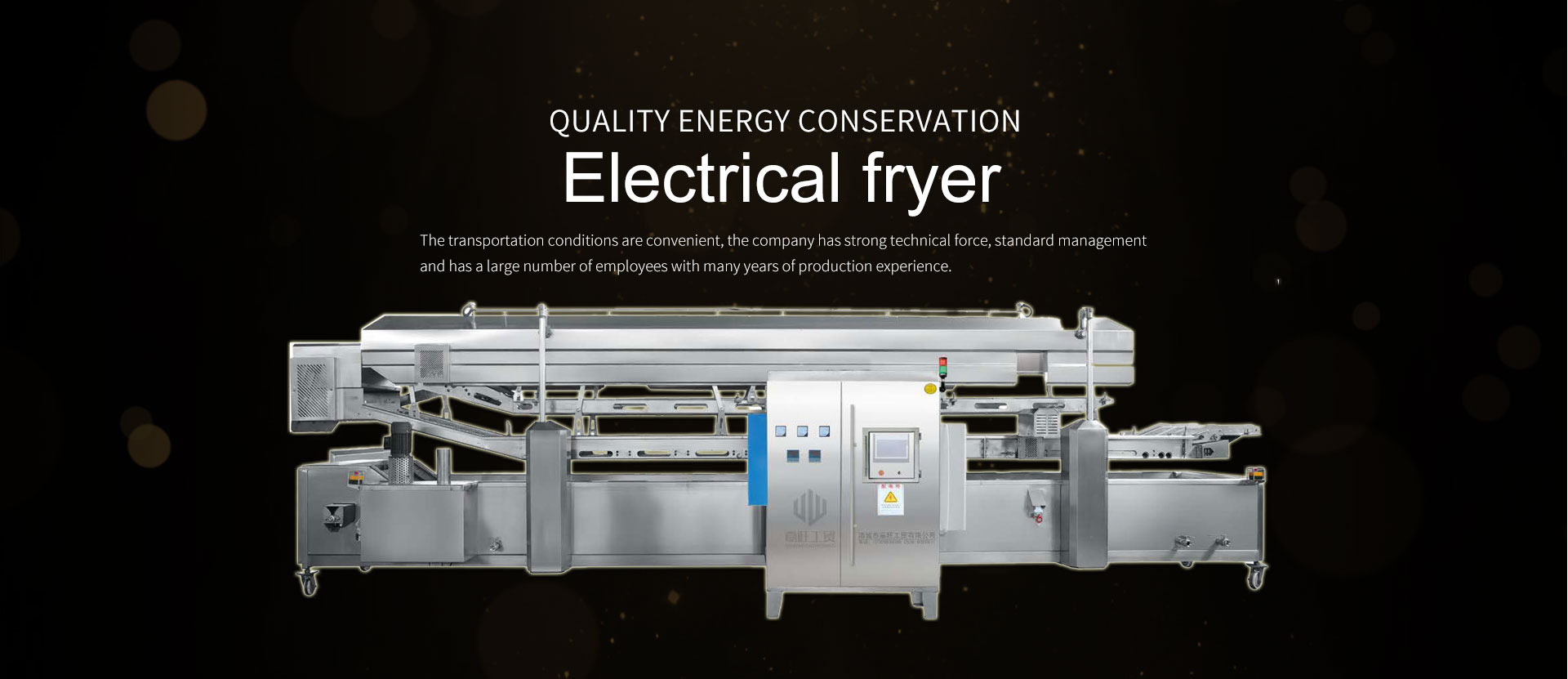
In practical terms, a stronger oil saving fryer will usually show a layout that supports even thermal distribution across the active frying area. This can include sensible spacing around heating components, controlled oil movement, and enough circulation to prevent stagnant pockets. For continuous lines in baking and snack processing, stable heat transfer is often more important than peak temperature capability.
Oil circulation should support the product, not fight it
Circulation is not just about moving oil from one point to another. The flow pattern needs to carry heat efficiently to the product while also moving crumbs and loose particles away from high-temperature zones. If circulation is too weak, temperature recovery becomes uneven. If it is poorly directed, product movement can become unstable or fragile coatings may break off more easily.
This is where line integration also matters. In some processes, upstream seasoning or surface treatment influences how much fine material enters the fryer. Equipment such as a drum coater may be part of that wider process logic, because a more controlled pre-fry coating stage can help reduce loose carryover into downstream thermal equipment. It does not replace fryer design, but it can affect how cleanly the whole line runs.
Filtration is not an accessory feature
When evaluators treat filtration as optional or secondary, oil consumption problems tend to return later. Fine particles left in circulation continue to carbonize, darken the oil, and interfere with flavor consistency. An efficient fryer design usually makes filtration easier to perform regularly instead of turning it into a disruptive maintenance task.
Important points include whether the oil filter is integrated into the operating routine, how easily oil can be transferred for cleaning, and whether sediment-prone areas are isolated from the main frying action. A fryer paired with a well-designed oil tank and filtration path generally gives better control over oil condition than a system that depends on infrequent manual intervention.
Temperature control should be judged during load changes
Many systems look stable when empty or lightly loaded. The more useful evaluation is what happens when cold product enters, when throughput shifts, or when line pauses occur. Good temperature control is not only about sensor accuracy. It also depends on sensor placement, control response, thermal inertia, and how quickly the machine recovers without overshooting.
If recovery is too aggressive, the oil may be stressed unnecessarily. If it is too slow, product color and internal texture can drift. In a real assessment, asking how the fryer behaves during normal disturbances often reveals more than asking for a target temperature range.
Structure and cleaning access affect oil life too
Oil efficiency is tied to mechanical design more than many buyers expect. Hard-to-clean corners, poorly sloped bottoms, and awkward drain arrangements allow residue to remain in the system. That residue re-enters operation on the next shift and shortens oil life again. Stainless construction alone does not solve this; geometry and access do.
It is worth checking whether the tank drains fully, whether internal components can be reached without excessive disassembly, and whether the design minimizes hidden accumulation points. If a production line also includes coating or finishing stages, even something as simple as where a drum coater sits relative to transfer conveyors can influence how much stray material reaches the fryer area.
A more useful way to compare options
When reviewing fryer designs, it helps to shift from broad claims to operating evidence. Instead of asking which machine “saves the most oil,” ask whether the design controls hot spots, supports clean circulation, removes fines efficiently, recovers temperature smoothly, and allows residue to be cleaned out without difficulty. Those are the features that usually separate a merely functional fryer from an oil-efficient one.
In other words, the best evaluation approach is to treat oil consumption as the result of thermal design, flow control, filtration, and maintainability working together. That is the practical basis for identifying an oil saving fryer that will remain efficient after installation, not just during specification review.
Online Consultation